What Is the Difference Between Medical and Surgical Nursing?
Nursing is a wide profession with many specialisations, but two of the most important branches are medical nursing and surgical nursing. Both are essential in patient care, yet their duties, working environments, and required skills are different. Knowing these differences is helpful for nursing students, healthcare workers, and anyone considering a nursing career.
Understanding Medical Nursing
Medical nursing focuses on caring for patients who suffer from illnesses that do not need surgery. These conditions are often chronic or long-term and require continuous treatment, monitoring, and education.
Key Responsibilities of Medical Nurses
Medical nurses usually work in areas such as medicine wards, neurology, cardiology, respiratory medicine, and infectious disease units, where patient care is more continuous and long-term.
Understanding Surgical Nursing
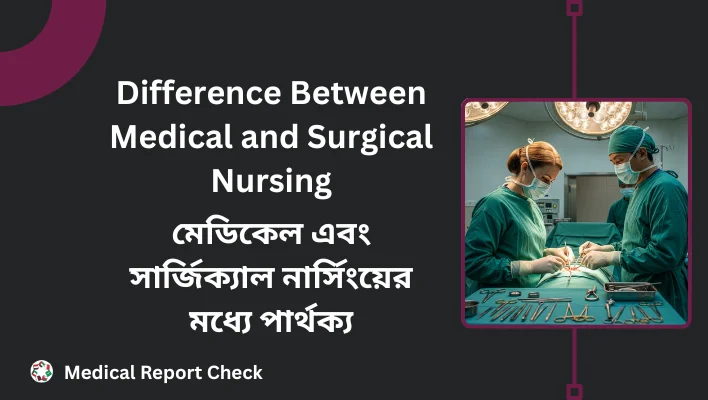
Surgical nursing is focused on patient care connected to surgical procedures. These nurses help patients before surgery, during operations, and after surgery to ensure safety and proper recovery.
Key Responsibilities of Surgical Nurses
Surgical nurses commonly work in operating rooms, surgical wards, recovery rooms, and post-anesthesia care units (PACU), where patient care is usually short-term but more intensive.
Core Differences Between Medical and Surgical Nursing
| Aspect | Medical Nursing | Surgical Nursing |
|---|---|---|
| Type of Patients | Non-surgical or chronically ill patients | Patients undergoing surgery |
| Main Focus | Disease management and long-term treatment | Pre-operative and post-operative care |
| Work Settings | Medical wards, clinics, specialty units | Operating theatres, surgical wards |
| Nature of Care | Continuous and long-term | Short-term but highly intensive |
| Common Equipment | IV lines, ECG monitors, oxygen systems | Surgical tools, anesthesia equipment |
| Skill Emphasis | Monitoring and counselling | Sterile techniques and wound care |
Skills Needed for Each Nursing Field
Although both nursing branches require compassion, teamwork, and responsibility, each field also needs different professional strengths.
Skills Essential for Medical Nurses
Skills Essential for Surgical Nurses
Nursing Education Pathways in Bangladesh
In Bangladesh, students enrolled in Diploma in Nursing Science & Midwifery or Bachelor of Science in Nursing (BScN) programs are trained in both medical and surgical nursing.
During Clinical Rotations, Students Gain Experience In:
Recognised Institutions Involved in Nursing Education Include:
This exposure helps students understand which nursing path matches their interests and abilities.
Why Knowing the Difference Matters
Understanding the difference between medical and surgical nursing is valuable because it helps:
Quick Summary
Read: What Are the Medical Tests for GCC?
Read: What Does It Mean When a Medical Report Is Positive?
Read: Dental Admit Card 2026
Read: Minimum Percentage Required for Admission in Medical College
Read: Medical License in Bangladesh
Frequently Asked Questions
Conclusion
Medical nursing and surgical nursing are both essential parts of the healthcare system. Medical nurses care for patients with long-term illnesses, while surgical nurses guide patients safely through surgery and recovery. For anyone planning a nursing career, understanding the difference between medical and surgical nursing is important for making the right professional choice. As healthcare continues to grow in Bangladesh, trained nurses in both fields remain in strong demand.